
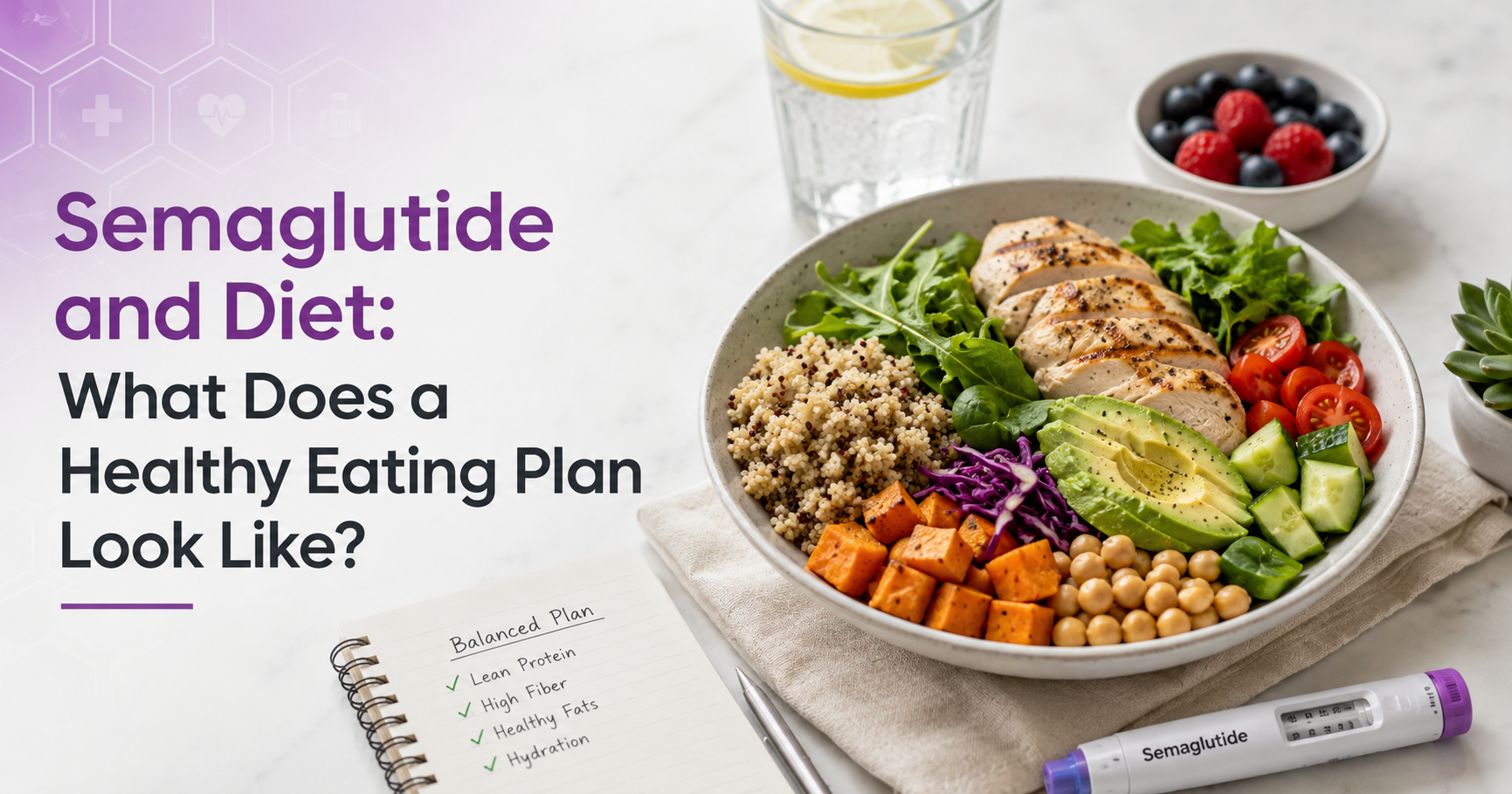
A healthy eating plan with semaglutide emphasizes nutrient-dense foods rather than extreme restriction. Prioritize adequate protein, vegetables and fruit, high-fiber carbohydrates as tolerated, healthy fats and fluids. Smaller portions may feel more comfortable because semaglutide can reduce appetite and delay gastric emptying.
Medical information note This article is for general educational information and is not a substitute for diagnosis, prescribing, dosing or individualized medical advice. Semaglutide is a prescription medicine. Product indications and instructions differ by formulation. Readers should use the exact current prescribing information and speak with a licensed healthcare professional. |
Start with food quality, not a crash diet
Semaglutide already tends to reduce calorie intake. Pairing it with an aggressive crash diet can make it harder to meet protein, fiber, vitamin, mineral and fluid needs.
A better pattern is to choose foods that deliver more nutrition per bite: lean proteins, dairy or alternatives, legumes, vegetables, fruit, whole grains as tolerated, nuts, seeds and unsaturated fats.
Make protein visible in each meal
Weight loss includes some lean tissue as well as fat. Adequate protein, together with resistance exercise, can help support muscle maintenance. The right amount depends on body size, kidney function, activity and other health factors.
People with kidney disease or other conditions should get individualized protein advice rather than following a high-protein trend online.
Use fiber thoughtfully
Fiber supports bowel regularity and can improve meal quality, but jumping quickly from a low-fiber diet to a very high-fiber plan may worsen bloating or fullness. Increase gradually and drink enough fluid if your clinician has not restricted fluids.
Whole foods such as vegetables, fruit, beans, oats and whole grains can be useful choices depending on tolerance.
Smaller meals may feel better
Because semaglutide delays gastric emptying, very large meals can feel uncomfortable for some people. Slower eating and smaller portions can make it easier to notice fullness before discomfort develops.
High-fat fried meals and heavy alcohol intake may also worsen gastrointestinal symptoms in some people, though there is no universal forbidden-food list.
Hydration deserves attention
Nausea, vomiting and diarrhea can reduce fluid intake and increase fluid loss. Dehydration is one pathway to kidney injury described in semaglutide labeling.
Keep fluids visible and spread intake through the day unless a clinician has given you a fluid restriction.
Frequently Asked Questions
What should I eat while taking semaglutide?
Prioritize nutrient-dense foods with adequate protein, fiber and fluids, using smaller portions if that improves tolerance.
Do I need to avoid carbs on semaglutide?
No universal rule requires avoiding carbohydrates. Choose portions and carbohydrate sources that fit your health goals and glucose needs.
Should I eat more protein on semaglutide?
Adequate protein is important during weight loss, but the right amount is individualized, especially with kidney or other medical conditions.
Why do large meals feel uncomfortable on semaglutide?
Semaglutide delays gastric emptying and can increase fullness, so large or rich meals may be harder to tolerate for some people.