
Questions to Ask Before Starting Semaglutide

Before starting semaglutide, ask which exact product is being prescribed, what it is approved to treat, why it fits your health history, what side effects and contraindications matter, how it interacts with other medicines, how to handle missed doses, what follow-up is needed, and where the medication will be dispensed.

Medical information note

This article is for general educational information and is not a substitute for diagnosis, prescribing, dosing or individualized medical advice. Semaglutide is a prescription medicine. Product indications and instructions differ by formulation. Readers should use the exact current prescribing information and speak with a licensed healthcare professional.

1. What exact product am I taking, and what is it approved for?

Semaglutide products differ by formulation, strength and indication. Make sure the brand or product name is clear and that the reason for treatment matches the current label or a clearly explained off-label clinical decision.

2. Why is semaglutide appropriate for me?

Ask what health goals the clinician is targeting and what alternatives were considered. A good answer should connect treatment to your health, not just a target clothing size.

3. Do I have any contraindications or special risks?

Review thyroid cancer history, MEN 2, allergies, pancreatitis, gallbladder disease, kidney issues, gastrointestinal symptoms and other relevant conditions.

4. How does this fit with my other medicines?

Bring an updated medication list, including diabetes medicines and oral drugs that require close monitoring. Semaglutide delays gastric emptying and can be relevant to oral-drug absorption.

5. What side effects are expected, and what is urgent?

Ask for specific instructions for nausea, vomiting, constipation, diarrhea, severe abdominal pain, allergic symptoms and dehydration.

6. What is the dose-escalation plan?

Understand the schedule for the exact product. Do not assume that another person’s online schedule applies to you.

7. What should I do if I miss a dose?

Missed-dose instructions differ by product and formulation. Get the rule in writing from the label or prescriber.

8. What should I eat and how should I exercise?

Ask for practical nutrition priorities and activity recommendations, especially if you have diabetes, kidney disease, gastrointestinal issues or low fitness.

9. Is this FDA-approved, compounded, or another type of product?

If compounded, ask why compounding is needed, who prepares it, how concentration and measurement work, and what regulatory oversight applies.

10. How will we judge success and safety?

Agree on follow-up timing and what will be monitored. Useful measures include treatment response, side effects, nutrition, activity, health markers and whether the plan remains worth continuing.

Frequently Asked Questions

What is the most important question before starting semaglutide?

Ask which exact product is being prescribed and why it is appropriate for your medical history and treatment goal.

Should I tell my doctor about all my medicines?

Yes. Include prescription drugs, over-the-counter medicines and supplements.

Should I ask whether semaglutide is compounded?

Yes. Compounded products are not FDA-approved and have different quality and regulatory considerations.

How often should semaglutide treatment be reviewed?

Follow-up timing is individualized, but treatment should be reassessed for benefit, side effects, adherence and safety over time.


Common Myths About Semaglutide and Weight Loss

Common semaglutide myths include that every semaglutide product is approved for weight loss, that more nausea means better results, that lifestyle no longer matters, and that compounded semaglutide is FDA-approved. Each is misleading. Product-specific labeling, safety monitoring and sustainable nutrition and activity remain important.

Medical information note

This article is for general educational information and is not a substitute for diagnosis, prescribing, dosing or individualized medical advice. Semaglutide is a prescription medicine. Product indications and instructions differ by formulation. Readers should use the exact current prescribing information and speak with a licensed healthcare professional.

Myth 1: Every semaglutide product is a weight-loss drug

Fact: semaglutide is an active ingredient used in different products. Rybelsus 3 mg, 7 mg and 14 mg is labeled for type 2 diabetes, while Wegovy has weight-management indications. Current Wegovy tablets use different strengths from Rybelsus.

Myth 2: If you are not nauseated, it is not working

Fact: nausea is a side effect, not a treatment target. People can respond without significant nausea, and severe symptoms can become a safety problem.

Myth 3: You no longer need to care about food quality

Fact: lower appetite can make nutrition quality more important because there are fewer opportunities to meet protein, fiber, fluid and micronutrient needs.

Myth 4: The highest dose is always the best dose

Fact: approved dosing depends on the exact product, indication, response and tolerability. Dose changes belong with the prescriber.

Myth 5: Compounded semaglutide is FDA-approved if a clinic sells it

Fact: FDA states that compounded drugs are not FDA-approved. Compounding can be medically appropriate in specific situations, but it is a different regulatory pathway.

Myth 6: A plateau means the medicine stopped working

Fact: weight loss often slows as body weight and energy needs change. A plateau is a reason to review the plan, not panic.

Myth 7: Semaglutide melts fat directly

Fact: semaglutide’s weight effect is linked primarily to appetite and reduced calorie intake, not a direct fat-burning action.

Myth 8: Results are guaranteed

Fact: response varies. Clinical-trial averages are useful evidence, not personal promises.

Frequently Asked Questions

Is every semaglutide product approved for weight loss?

No. FDA-approved uses vary by product and formulation.

Does nausea mean semaglutide is working better?

No. Nausea is a side effect, not a measure of effectiveness.

Is compounded semaglutide FDA-approved?

No. Compounded drugs are not FDA-approved.

Does semaglutide replace diet and exercise?

No. Approved weight-management treatment is used alongside nutrition and increased physical activity.

Understanding Appetite, Hunger and Fullness While Using GLP-1 Therapy

GLP-1 therapy can change hunger and fullness by influencing appetite signaling and gastric emptying. Some people notice less frequent hunger, earlier fullness or less preoccupation with food. The goal is not zero appetite; healthy treatment should still support adequate nutrition, hydration and a sustainable eating pattern.

Medical information note

This article is for general educational information and is not a substitute for diagnosis, prescribing, dosing or individualized medical advice. Semaglutide is a prescription medicine. Product indications and instructions differ by formulation. Readers should use the exact current prescribing information and speak with a licensed healthcare professional.

Hunger and fullness are different signals

Hunger is the drive to eat; fullness is the sensation that enough food has been consumed. People can have low hunger but still eat out of habit, stress or availability, or feel full quickly while still needing more nutrition later.

Understanding the difference helps people respond rather than simply follow rigid rules.

Why GLP-1 therapy can change both

Semaglutide decreases calorie intake through effects thought to involve appetite and delays gastric emptying. Together, these actions can change how quickly a person wants food and how much feels comfortable.

The intensity varies by individual and by stage of treatment.

What people mean by “food noise”

Food noise is an informal term for frequent thoughts about food, planning the next meal or feeling pulled toward snacks. Some people report that these thoughts become quieter on GLP-1 treatment.

It is not a formal diagnostic measure, so it should be treated as a subjective experience rather than a guaranteed medication effect.

Avoid turning low appetite into undernutrition

If hunger is weak, eating only when extremely hungry may result in too little protein, fluid or total nutrition. A light meal schedule can provide structure without forcing large portions.

Persistent inability to eat or drink comfortably deserves medical review.

Appetite may not stay identical forever

Hunger can vary with dose, time, sleep, stress, activity, menstrual cycle, illness and adaptation. A return of some appetite does not automatically mean loss of treatment effect.

Frequently Asked Questions

Why am I less hungry on semaglutide?

Semaglutide affects GLP-1 pathways involved in appetite and can reduce calorie intake.

Why do I feel full after a small meal?

Semaglutide can affect satiety and delays gastric emptying, which may increase fullness.

What is food noise?

It is an informal term for frequent or intrusive thoughts about food. Some people report less food noise during GLP-1 treatment.

Should I wait until I am hungry to eat on semaglutide?

Not always. If hunger is very low, some meal structure may help maintain adequate nutrition and hydration.

Weight-Loss Plateaus During GLP-1 Treatment: What They Mean

A weight-loss plateau during GLP-1 treatment means the scale has stabilized after a period of loss. It can happen because the body’s energy needs decrease as weight falls, appetite and intake adapt, activity changes, or normal fluid fluctuations mask fat loss. A plateau should prompt review, not automatic dose changes.

Medical information note

This article is for general educational information and is not a substitute for diagnosis, prescribing, dosing or individualized medical advice. Semaglutide is a prescription medicine. Product indications and instructions differ by formulation. Readers should use the exact current prescribing information and speak with a licensed healthcare professional.

Plateaus are part of weight biology

As body weight decreases, the body generally requires fewer calories to maintain itself. The gap between intake and expenditure can narrow over time, so the pace of loss often slows.

This can happen with medication, lifestyle treatment or both.

First make sure it is a real plateau

Daily weight moves with fluid, salt, bowel movements and hormones. A few flat days are not a plateau. Look at multi-week trends using consistent measurement conditions.

Waist measurement, clothing fit, fitness and health markers can provide additional context.

Review eating patterns without blaming yourself

Portions may gradually increase, liquid calories may return or low appetite may lead to irregular meals followed by grazing later. These are behaviors to investigate, not moral failures.

A dietitian can help rebuild structure while preserving nutrition quality.

Activity can drift during weight loss

If fatigue, nausea or low intake reduces movement, daily energy expenditure can fall. Resistance training and regular walking can support function and help maintain activity.

A plateau can be a useful moment to review sleep and stress as well.

Do not respond by changing dose on your own

Dose decisions depend on the exact product, approved schedule, side effects and clinical response. A prescriber may decide that the current treatment remains appropriate even if the scale is temporarily flat.

The goal is sustainable health improvement, not continuous weekly loss forever.

Frequently Asked Questions

Is a semaglutide plateau normal?

Plateaus can occur during weight loss and do not automatically mean treatment has failed.

How long is a real weight-loss plateau?

There is no universal cutoff, but several weeks of a stable trend is more meaningful than a few days.

Should I increase semaglutide if my weight stops changing?

Do not self-adjust. Dose decisions should follow the exact product label and prescriber guidance.

What should I review during a plateau?

Review intake, activity, sleep, side effects, adherence, medications and whether the trend is truly stable.

Why Lifestyle Changes Still Matter With GLP-1 Weight Management

Lifestyle changes still matter with GLP-1 weight management because medication mainly changes biological signals such as appetite and calorie intake; it does not replace nutrition quality, physical fitness, sleep, strength or behavioral routines. Approved weight-management treatment is used alongside a reduced-calorie eating plan and increased physical activity.

Medical information note

This article is for general educational information and is not a substitute for diagnosis, prescribing, dosing or individualized medical advice. Semaglutide is a prescription medicine. Product indications and instructions differ by formulation. Readers should use the exact current prescribing information and speak with a licensed healthcare professional.

Medication can make habits easier, but it cannot perform them

A lower appetite can create breathing room around food decisions. That is valuable. But the body still needs protein, fiber, micronutrients, fluids and movement.

The medication changes one part of the environment; daily habits determine what fills the space it creates.

Nutrition quality protects against under-eating badly

Eating less can reduce calories while still producing a poor diet. When appetite is low, every meal becomes more important nutritionally.

Simple priorities such as protein, produce, fiber-rich foods and hydration can make the diet more resilient.

Exercise protects capabilities the scale cannot measure

Aerobic activity improves fitness. Resistance training supports strength and lean tissue. Balance and mobility work support function.

These benefits matter even if body weight is temporarily stable.

Sleep and stress affect appetite too

GLP-1 signaling is not the only input into hunger. Short sleep, stress and irregular routines can still influence cravings, energy and food choices.

A sustainable plan looks at the whole week, not only medication day.

Habits become especially important if treatment changes

Appetite can increase if medication is stopped or changed. People who have built meal structure, activity and coping strategies are better prepared for that transition.

Lifestyle support is not a moral requirement; it is a practical part of chronic-disease management.

Frequently Asked Questions

Do GLP-1 medicines work without lifestyle changes?

Medication can affect appetite, but approved weight-management use includes nutrition and increased physical activity.

Why exercise if semaglutide is already helping me lose weight?

Exercise supports cardiovascular fitness, strength, muscle maintenance and health beyond the scale.

Can I eat too little on a GLP-1?

Yes. Very low appetite can lead to inadequate protein, fluids and nutrients, which should be addressed.

Do habits matter after stopping a GLP-1?

Yes. Appetite and weight can change after treatment stops, making sustainable routines especially useful.

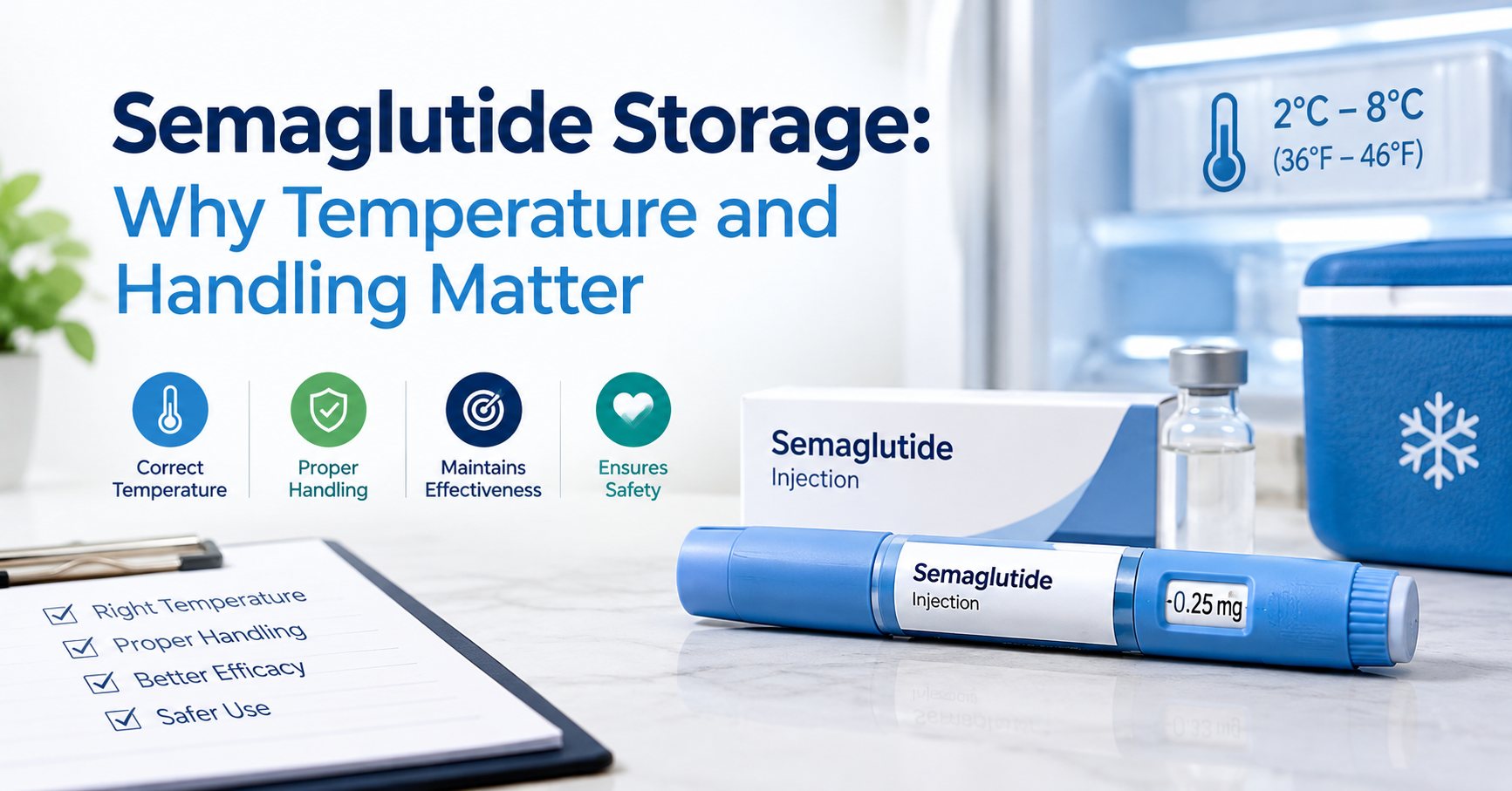
Semaglutide Storage: Why Temperature and Handling Matter

Semaglutide storage depends on the exact product and formulation. Injectable products may require refrigeration with specific room-temperature allowances, while tablets have different storage instructions related to moisture and packaging. Always follow the manufacturer’s current label and ask the dispensing pharmacy if shipping temperature or product integrity is uncertain.

Medical information note

This article is for general educational information and is not a substitute for diagnosis, prescribing, dosing or individualized medical advice. Semaglutide is a prescription medicine. Product indications and instructions differ by formulation. Readers should use the exact current prescribing information and speak with a licensed healthcare professional.

There is no single storage rule for every semaglutide product

Semaglutide appears in multiple products, and storage instructions differ. A rule for Wegovy pens should not automatically be applied to a vial, another brand or an oral tablet.

The medication guide or package insert for the exact product is the source of truth.

Why temperature matters

Biologic peptide medicines can be sensitive to heat, freezing and light. Approved injectable semaglutide products have specified refrigeration and room-temperature conditions.

Do not freeze an injectable product unless the exact label says freezing is permitted; for common semaglutide products, freezing is generally a reason not to use the medication.

Shipping is part of storage

An online pharmacy should use packaging appropriate for the labeled storage needs. If an injectable medication arrives hot, frozen, damaged or with compromised packaging, contact the dispensing pharmacy before use.

Do not guess based on how the ice pack feels at delivery.

Tablets have different handling needs

Oral semaglutide products are not refrigerated like injections. The label may specify storage in the original container and protection from moisture.

Moving tablets into an unapproved pill organizer can be inappropriate for some formulations, so check the exact instructions.

When in doubt, pause and verify

Temperature excursions can be product-specific. The safest step is to provide the pharmacy with the product name, lot information if available, shipping circumstances and estimated temperature exposure.

A storage problem should be resolved before the medicine is taken or injected.

Frequently Asked Questions

Does semaglutide need refrigeration?

Many injectable semaglutide products require refrigeration before use, but exact rules vary by product. Check the current label.

Can semaglutide be frozen?

Common approved injectable semaglutide products should not be used if frozen. Follow the exact product instructions.

Do semaglutide tablets need refrigeration?

No. Oral semaglutide products have different storage requirements, often involving room temperature and protection from moisture.

What if my semaglutide arrived warm?

Contact the dispensing pharmacy and provide the exact product and shipping details before using it.

Compounded Semaglutide: Important Safety Considerations

Compounded semaglutide is not FDA-approved. FDA does not verify a compounded drug’s safety, effectiveness or quality before marketing. FDA has also reported dosing errors with compounded injectable semaglutide, including overdoses linked to concentration and measurement confusion. Patients should use compounding only through legitimate clinical and pharmacy channels.

Medical information note

This article is for general educational information and is not a substitute for diagnosis, prescribing, dosing or individualized medical advice. Semaglutide is a prescription medicine. Product indications and instructions differ by formulation. Readers should use the exact current prescribing information and speak with a licensed healthcare professional.

Compounded does not mean generic

A generic drug is FDA-approved under a defined regulatory pathway. A compounded drug is prepared to meet a particular need and does not go through the same approval process.

That distinction should be explicit in any consumer-facing article.

Concentration can be confusing

Some compounded injectable semaglutide products are dispensed in multidose vials rather than fixed-dose pens. The concentration may vary by pharmacy, and patients may be instructed to measure a volume with a syringe.

FDA has described errors involving confusion between milligrams, milliliters and syringe units, as well as errors by prescribers calculating doses.

Quality oversight is different

FDA does not review compounded drugs for safety, effectiveness or quality before marketing. Poor compounding practices can lead to contamination or incorrect potency.

Consumers should know which pharmacy or outsourcing facility prepared the product and what oversight applies.

Ask what form of semaglutide is being used

FDA has previously raised concerns about salt forms of semaglutide used in some compounded products. The product’s active ingredient and source should be transparent to the prescriber and patient.

Do not rely on vague labels such as ‘GLP-1 blend’ when a prescription drug is being discussed.

Avoid direct-to-consumer shortcuts

FDA’s 2026 actions show increased scrutiny of companies that market compounded GLP-1 products with misleading claims. A low-friction checkout should not replace a clinical assessment.

If a compounded product is medically necessary, the reason should be clear and documented in the treatment plan.

Frequently Asked Questions

Is compounded semaglutide FDA-approved?

No. Compounded drugs are not FDA-approved.

Why can compounded semaglutide dosing be confusing?

Vial concentration and syringe units may vary, and FDA has reported errors involving milligrams, milliliters and units.

Is compounded semaglutide the same as generic semaglutide?

No. Compounded drugs and FDA-approved generic drugs are different regulatory categories.

What should I ask before using compounded semaglutide?

Ask why compounding is needed, who prepared it, what concentration is supplied, how dosing is measured, and how the prescriber will monitor safety.

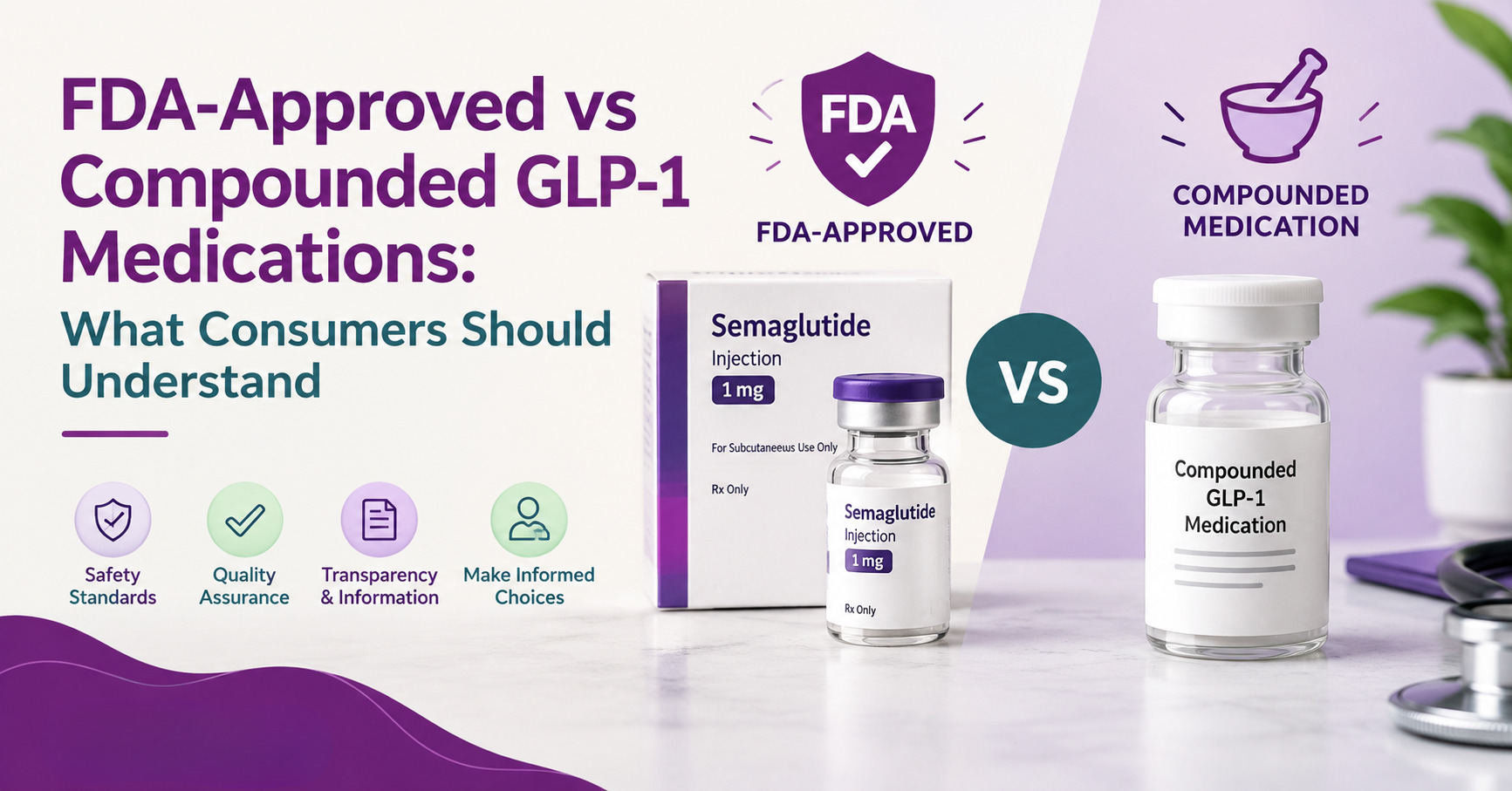
FDA-Approved vs Compounded GLP-1 Medications: What Consumers Should Understand

FDA-approved medicines are reviewed for safety, effectiveness and manufacturing quality before approval. Compounded drugs are not FDA-approved, and FDA does not verify their safety, effectiveness or quality before they are marketed. Compounding can serve specific patient needs, but it is not the same as generic-drug approval or brand approval.

Medical information note

This article is for general educational information and is not a substitute for diagnosis, prescribing, dosing or individualized medical advice. Semaglutide is a prescription medicine. Product indications and instructions differ by formulation. Readers should use the exact current prescribing information and speak with a licensed healthcare professional.

What FDA approval means

An FDA-approved medicine has gone through an approval process that evaluates evidence for safety and effectiveness and establishes manufacturing and labeling requirements. The approved product has a defined formulation, strength, indication and prescribing information.

This does not mean an approved drug has no risk; it means the risks and benefits have been evaluated through the regulatory process.

What compounding means

Compounding is the preparation of a medication for a patient under specific circumstances. FDA explains that compounded drugs are not FDA-approved and that the agency does not verify safety, effectiveness or quality before they are marketed.

Compounded drugs are also not the same as FDA-approved generic medicines.

Why GLP-1 compounding has received attention

During shortages, compounded GLP-1 products became widely marketed. FDA has since clarified compounding policy as supply stabilized and has taken action against misleading claims involving non-FDA-approved compounded GLP-1 products.

Consumers should be especially cautious when marketing suggests a compounded product is a direct, approved equivalent.

Dosing and measurement can create extra risk

FDA has reported adverse events, including hospitalizations, associated with dosing errors involving compounded injectable semaglutide. Problems included patients measuring incorrect amounts and healthcare professionals miscalculating doses.

Vial concentrations and syringe units can create confusion that does not exist with every prefilled approved product.

When compounding may be appropriate

FDA notes that compounded drugs can have a role when an FDA-approved drug cannot meet a patient’s medical needs. That is different from mass-marketing a compounded product as a cheaper clone.

The decision should involve a licensed prescriber and an appropriately regulated pharmacy or outsourcing facility.

Frequently Asked Questions

Are compounded semaglutide products FDA-approved?

No. FDA states that compounded drugs are not FDA-approved.

Is a compounded drug the same as a generic drug?

No. FDA-approved generics meet specific approval requirements; compounded drugs do not go through that approval process.

Why has FDA warned about compounded semaglutide?

FDA has reported dosing errors and has taken action against misleading marketing of non-FDA-approved compounded GLP-1 products.

Can compounded medication ever be appropriate?

Yes, it can serve specific patient needs when an FDA-approved drug cannot meet them, under applicable compounding laws and clinical oversight.

How to Identify Safe and Legitimate Online Sources for Prescription GLP-1 Medicines

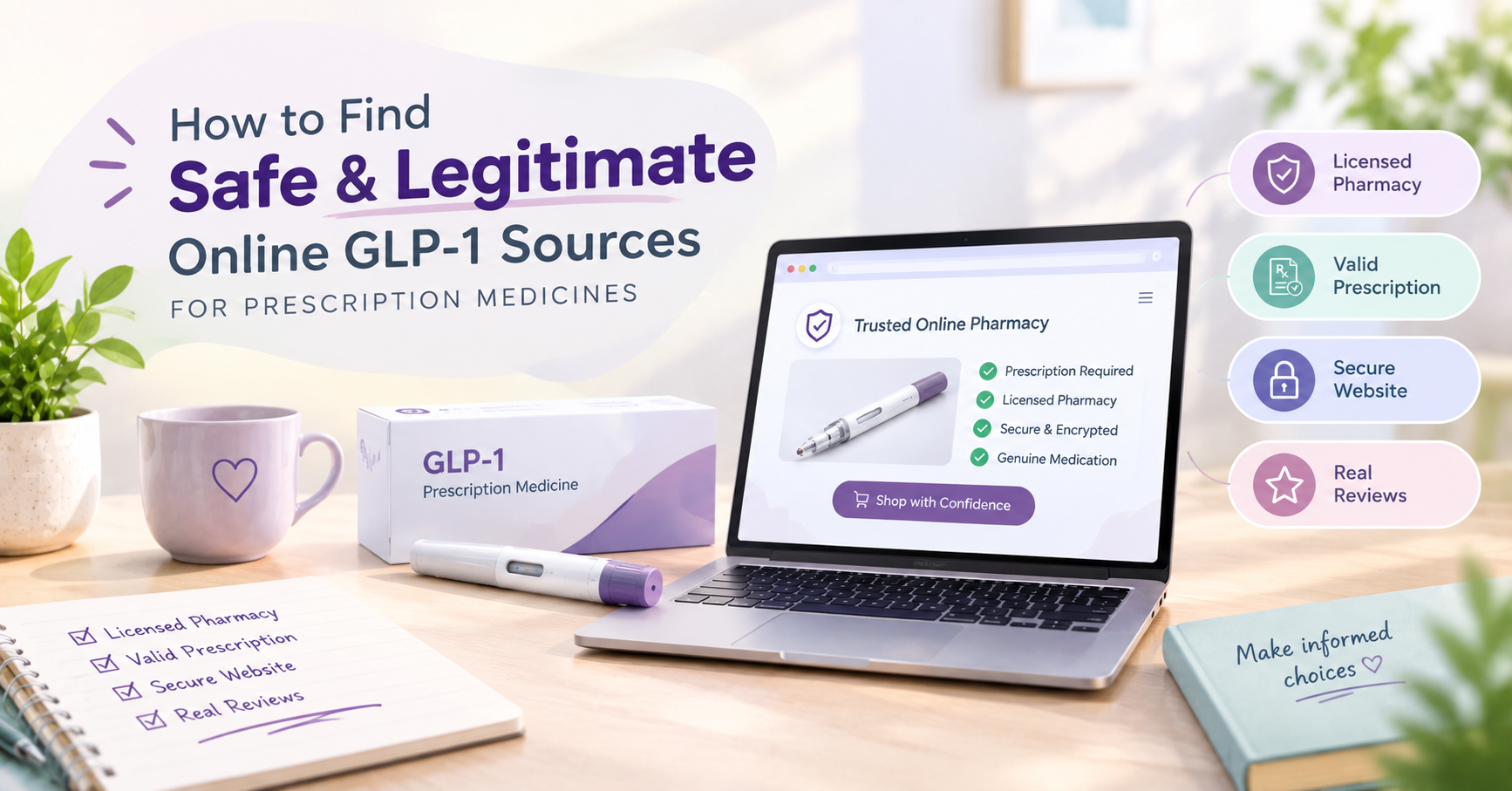
A legitimate online source for prescription GLP-1 medicine should involve a licensed healthcare professional, use an appropriately licensed pharmacy, clearly identify the exact product, require a valid prescription when required, provide pharmacist contact information and avoid claims that compounded drugs are FDA-approved or identical to approved products.

prescription pathway

This article is for general educational information and is not a substitute for diagnosis, prescribing, dosing or individualized medical advice. Semaglutide is a prescription medicine. Product indications and instructions differ by formulation. Readers should use the exact current prescribing information and speak with a licensed healthcare professional.

Start with the prescription pathway

Prescription GLP-1 medicines should not be treated like ordinary e-commerce supplements. A legitimate pathway includes a qualified healthcare professional who evaluates whether the medicine is appropriate and provides follow-up.

A site that sells prescription medication with no meaningful medical review deserves extra caution.

Verify the pharmacy

Check whether the dispensing pharmacy is licensed for the state where the patient is located and whether contact information is transparent. Consumers should be able to identify who is prescribing, who is dispensing and what product is being supplied.

A polished website is not proof of pharmacy legitimacy.

Know exactly what product you are receiving

The page should clearly distinguish FDA-approved branded or generic products from compounded medication. FDA states that compounded drugs are not FDA-approved and are not reviewed for safety, effectiveness or quality before marketing.

Descriptions such as ‘same as FDA-approved’ or ‘FDA-approved compounded semaglutide’ are misleading.

Be cautious with price and result claims

Very low prices, guaranteed weight loss, no-prescription offers, countdown timers and claims of zero risk are warning signs. Prescription decisions should not be driven by urgency tactics.

FDA has taken enforcement action against misleading direct-to-consumer marketing of compounded GLP-1 products in 2026.

Shipping and storage matter

Temperature-sensitive products must be shipped and stored according to the exact manufacturer’s instructions. If a medicine arrives warm, damaged or without clear product identity, contact the dispensing pharmacy before using it.

Do not rely on a generic storage article when the package insert for the exact product is available.

Frequently Asked Questions

Can I legally buy semaglutide online?

Prescription semaglutide can be obtained through legitimate online healthcare and pharmacy pathways when applicable laws, prescribing requirements and pharmacy licensing are followed.

How do I know if an online pharmacy is legitimate?

Verify pharmacy licensing, prescriber involvement, contact information, prescription requirements and the exact product being dispensed.

Are compounded GLP-1 drugs FDA-approved?

No. FDA states that compounded drugs are not FDA-approved.

What is a red flag on a GLP-1 website?

No prescription requirement, guaranteed results, unclear pharmacy identity, misleading FDA claims or pressure to buy immediately are important warning signs.

GLP-1 vs GIP: Understanding Modern Weight-Management Medications

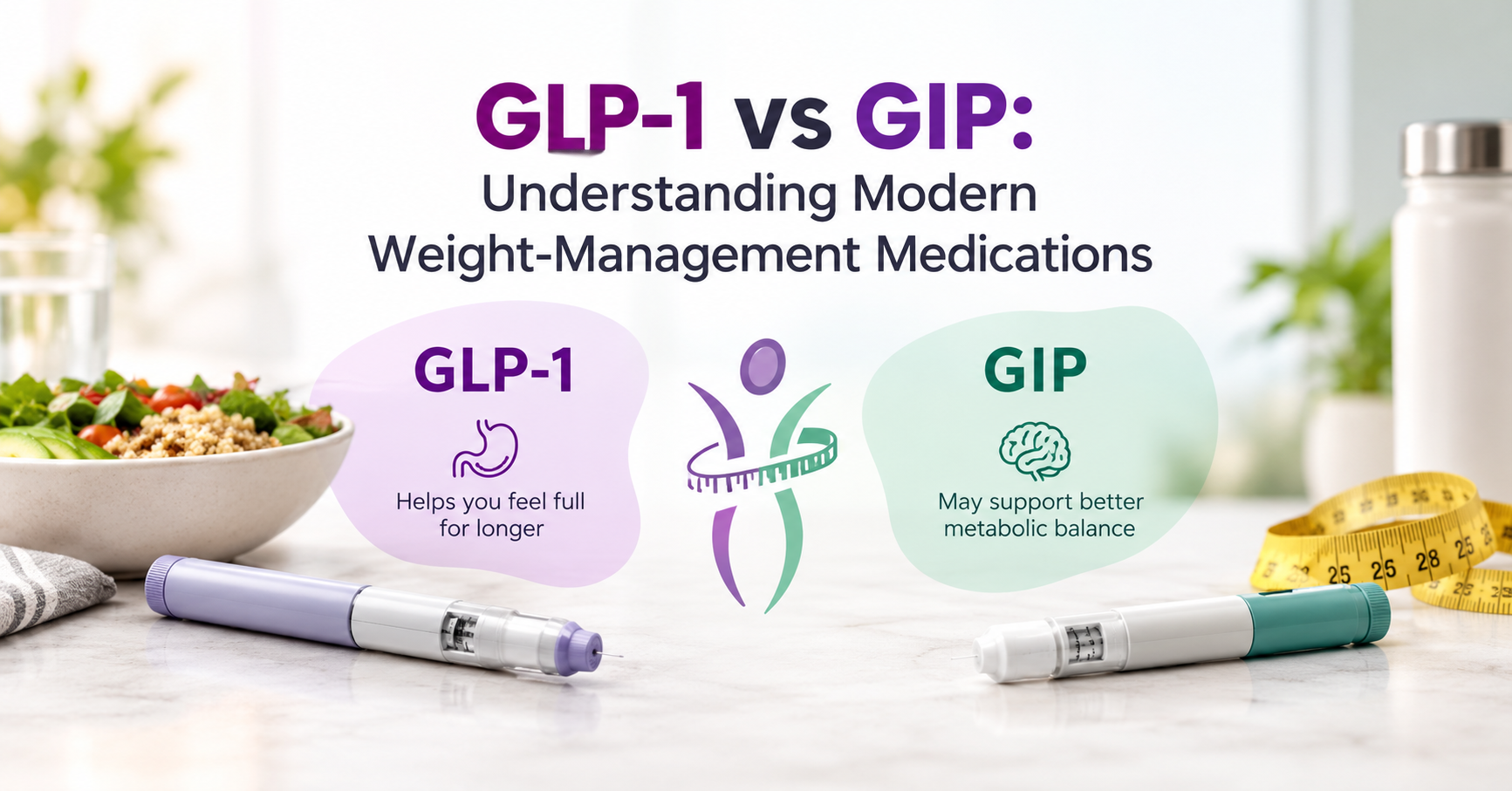
GLP-1 and GIP are hormone pathways involved in the body’s response to food. Semaglutide activates GLP-1 receptors. Tirzepatide activates both GIP and GLP-1 receptors. These mechanisms can affect appetite and metabolic signaling, but treatment decisions depend on specific FDA-approved products, evidence, safety and individual clinical needs.

Medical information note

This article is for general educational information and is not a substitute for diagnosis, prescribing, dosing or individualized medical advice. Semaglutide is a prescription medicine. Product indications and instructions differ by formulation. Readers should use the exact current prescribing information and speak with a licensed healthcare professional.

What GLP-1 does

GLP-1 is released after eating and participates in insulin, glucagon, appetite and gastric-emptying signals. GLP-1 receptor agonists extend that signaling in a medication form.

Semaglutide is a prominent example of this class.

What GIP does

GIP stands for glucose-dependent insulinotropic polypeptide. It is another incretin hormone involved in the body’s response to meals, including insulin-related signaling.

Modern medicines can target more than one incretin receptor at the same time.

Where tirzepatide fits

Tirzepatide activates both GIP and GLP-1 receptors. That dual mechanism differentiates it from semaglutide, which targets GLP-1 receptors.

Mechanism alone does not tell a person which treatment is appropriate; product-specific trials and safety data matter.

Why “more receptors” does not automatically mean better

A dual mechanism may produce different clinical effects, but treatment must still be judged by benefit, tolerability and safety for the individual. Side effects, contraindications, other medicines and access can all change the practical answer.

Marketing language often compresses these details into a simple hierarchy that does not exist for every patient.

Read the product label, not just the class name

Knowing GLP-1 and GIP helps make sense of the science, but prescriptions are written for specific medicines. Always verify the exact product, indication and current prescribing information.

Frequently Asked Questions

Is GLP-1 the same as GIP?

No. They are different incretin hormone pathways involved in meal-related metabolic signaling.

Does semaglutide act on GIP?

Semaglutide is a GLP-1 receptor agonist, not a dual GIP/GLP-1 agonist.

What medicine targets both GIP and GLP-1?

Tirzepatide is a dual GIP and GLP-1 receptor agonist.

Is a dual agonist automatically better?

No. Clinical appropriateness depends on the exact indication, evidence, safety, tolerability and patient factors.

Add to cart