
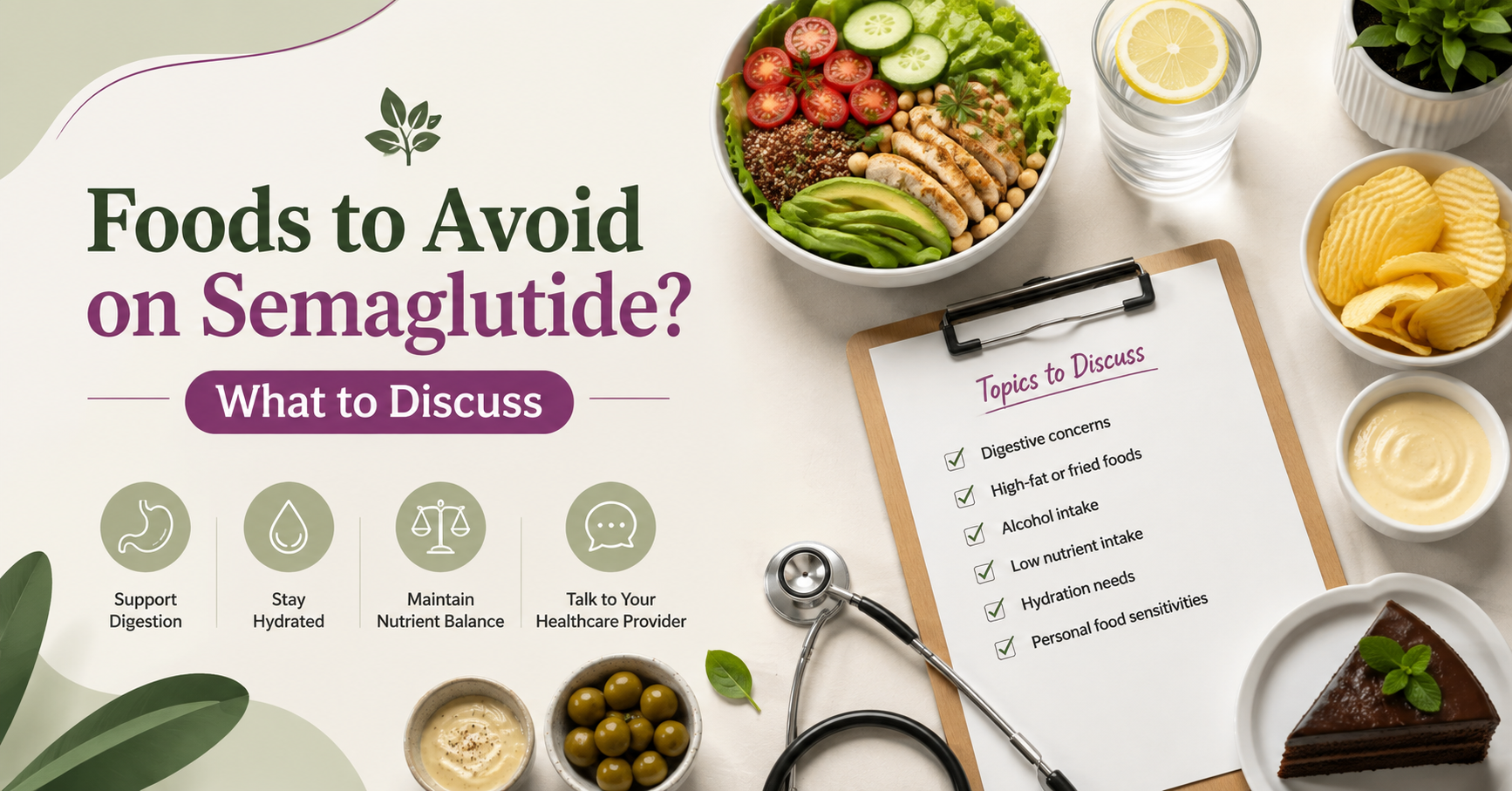
There is no single FDA list of foods that everyone must avoid with semaglutide. However, very large meals, high-fat or fried foods, heavy alcohol intake and foods that worsen an individual’s nausea, reflux, constipation or diarrhea may be harder to tolerate. Medical conditions can add specific food restrictions.
This article is for general educational information and is not a substitute for diagnosis, prescribing, dosing or individualized medical advice. Semaglutide is a prescription medicine. Product indications and instructions differ by formulation. Readers should use the exact current prescribing information and speak with a licensed healthcare professional. |
There is no universal “do not eat” list
Semaglutide prescribing information focuses on administration, interactions, warnings and side effects rather than banning a standard list of foods. What matters most is how a person’s diet interacts with symptoms and other health conditions.
That means a useful food plan is personal, not a viral checklist.
Large, rich meals may be harder to tolerate
Semaglutide delays gastric emptying and can increase fullness. Very large meals, especially meals high in fat, may sit heavily and worsen nausea, reflux or discomfort for some people.
Smaller portions and slower eating can be a practical first adjustment.
Alcohol deserves an individual conversation
Alcohol adds calories and can affect judgment, hydration and glucose. For people with diabetes, pancreatitis risk, liver disease or other conditions, the conversation may be more important.
Ask the prescriber or pharmacist how alcohol fits with your specific medical history and other medicines.
Constipation and diarrhea require opposite strategies sometimes
Someone with constipation may benefit from gradual fiber, fluids and movement, while someone with active diarrhea may temporarily tolerate a different pattern. Forcing the same ‘high fiber’ plan on every symptom can backfire.
Persistent symptoms should be assessed, especially if hydration is difficult.
Your other diagnoses can create real restrictions
Kidney disease, diabetes, gallbladder disease, celiac disease, food allergies, eating disorders and other conditions can change the safest eating pattern. These are stronger reasons for individualized advice than the medication name alone.
Frequently Asked Questions
What foods should I avoid on semaglutide?
There is no universal banned-food list. Avoid or reduce foods that consistently worsen your symptoms and follow any condition-specific advice from your clinician.
Can I eat fatty foods on semaglutide?
Some people find high-fat or fried meals harder to tolerate because of fullness or nausea, but tolerance varies.
Can I drink alcohol on semaglutide?
Discuss alcohol with your clinician, particularly if you have diabetes, pancreatitis risk, liver disease or take other medicines.
What should I eat if semaglutide causes nausea?
Smaller, simpler meals and adequate fluids may be easier to tolerate, but persistent or severe nausea should be discussed with a healthcare professional.