
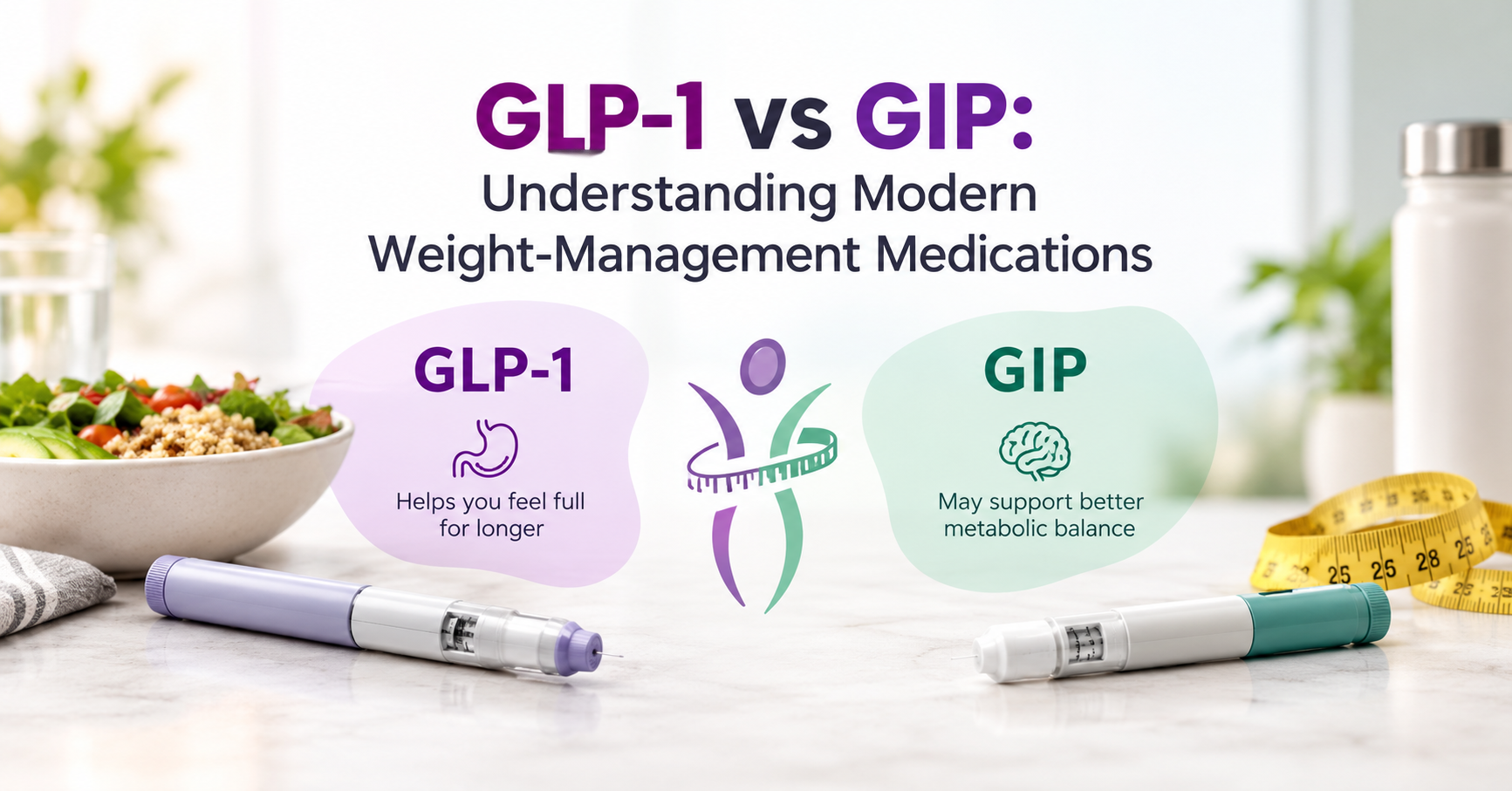
GLP-1 and GIP are hormone pathways involved in the body’s response to food. Semaglutide activates GLP-1 receptors. Tirzepatide activates both GIP and GLP-1 receptors. These mechanisms can affect appetite and metabolic signaling, but treatment decisions depend on specific FDA-approved products, evidence, safety and individual clinical needs.
Medical information note This article is for general educational information and is not a substitute for diagnosis, prescribing, dosing or individualized medical advice. Semaglutide is a prescription medicine. Product indications and instructions differ by formulation. Readers should use the exact current prescribing information and speak with a licensed healthcare professional. |
What GLP-1 does
GLP-1 is released after eating and participates in insulin, glucagon, appetite and gastric-emptying signals. GLP-1 receptor agonists extend that signaling in a medication form.
Semaglutide is a prominent example of this class.
What GIP does
GIP stands for glucose-dependent insulinotropic polypeptide. It is another incretin hormone involved in the body’s response to meals, including insulin-related signaling.
Modern medicines can target more than one incretin receptor at the same time.
Where tirzepatide fits
Tirzepatide activates both GIP and GLP-1 receptors. That dual mechanism differentiates it from semaglutide, which targets GLP-1 receptors.
Mechanism alone does not tell a person which treatment is appropriate; product-specific trials and safety data matter.
Why “more receptors” does not automatically mean better
A dual mechanism may produce different clinical effects, but treatment must still be judged by benefit, tolerability and safety for the individual. Side effects, contraindications, other medicines and access can all change the practical answer.
Marketing language often compresses these details into a simple hierarchy that does not exist for every patient.
Read the product label, not just the class name
Knowing GLP-1 and GIP helps make sense of the science, but prescriptions are written for specific medicines. Always verify the exact product, indication and current prescribing information.
Frequently Asked Questions
Is GLP-1 the same as GIP?
No. They are different incretin hormone pathways involved in meal-related metabolic signaling.
Does semaglutide act on GIP?
Semaglutide is a GLP-1 receptor agonist, not a dual GIP/GLP-1 agonist.
What medicine targets both GIP and GLP-1?
Tirzepatide is a dual GIP and GLP-1 receptor agonist.
Is a dual agonist automatically better?
No. Clinical appropriateness depends on the exact indication, evidence, safety, tolerability and patient factors.