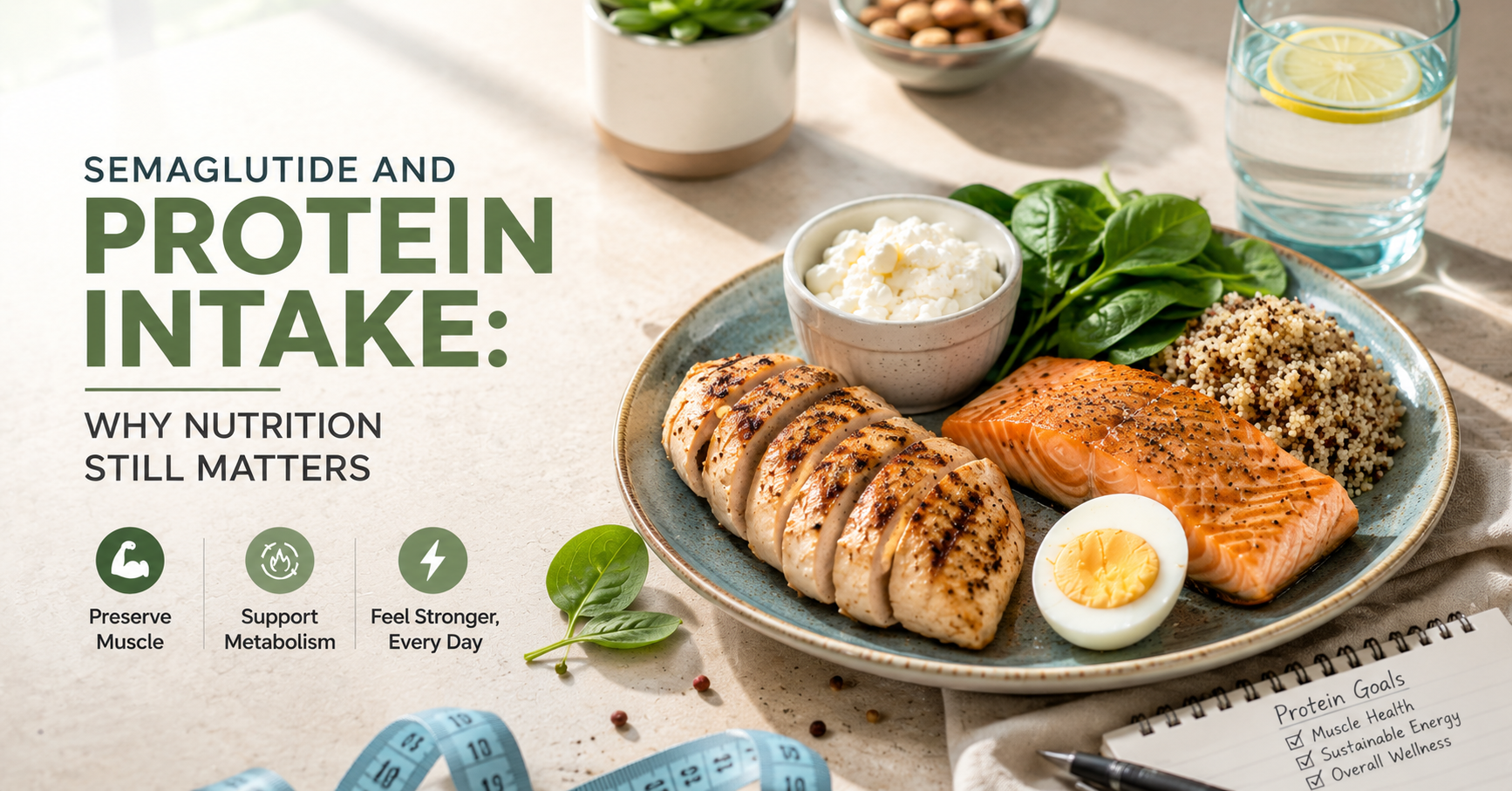
Protein remains important during semaglutide-assisted weight loss because the body can lose lean tissue as well as fat. Lower appetite may make adequate intake harder. A balanced plan spreads protein across meals and pairs it with resistance exercise, while adjusting the amount for kidney health, body size and individual clinical needs.
Medical information note This article is for general educational information and is not a substitute for diagnosis, prescribing, dosing or individualized medical advice. Semaglutide is a prescription medicine. Product indications and instructions differ by formulation. Readers should use the exact current prescribing information and speak with a licensed healthcare professional. |
Weight loss is not only fat loss
Current Wegovy labeling notes that semaglutide lowers body weight with greater fat-mass loss than lean-mass loss. Even so, some lean tissue can be lost during weight reduction.
Preserving strength and function is one reason protein and resistance training deserve deliberate attention.
Lower appetite can crowd out protein
When portions get much smaller, people may eat whatever is easiest and stop before reaching the protein part of a meal. Planning helps. Starting with a protein-rich food can make nutrient intake more reliable.
Useful options can include eggs, yogurt, fish, poultry, lean meat, tofu, tempeh, legumes and protein-rich dairy alternatives depending on preferences and medical needs.
More is not always better
There is no single protein target that fits every person. Body size, age, training, kidney function and total calorie intake matter. Very high-protein advice from social media can be inappropriate for some medical conditions.
A dietitian or clinician can help set a realistic target.
Spread intake through the day
A large protein-heavy dinner can be uncomfortable for someone who feels full quickly. Smaller amounts across meals and snacks may be easier to tolerate.
This approach also supports a more balanced intake of vegetables, fruit, fiber-rich carbohydrates and healthy fats.
Pair nutrition with training
Protein provides building blocks; resistance exercise provides the training signal. Together they are more useful for preserving muscle function than focusing on the scale alone.
Frequently Asked Questions
Why is protein important on semaglutide?
Weight loss can include lean tissue, and adequate protein supports muscle maintenance and overall nutrition.
How much protein should I eat on semaglutide?
There is no universal number. Needs depend on body size, activity, age, kidney health and other clinical factors.
Should I use protein shakes on semaglutide?
They can be convenient for some people, but they are not required. Choose products that fit your nutrition and medical needs.
Can I lose muscle while taking semaglutide?
Some lean tissue can be lost during weight loss, which is why adequate nutrition and resistance training matter.