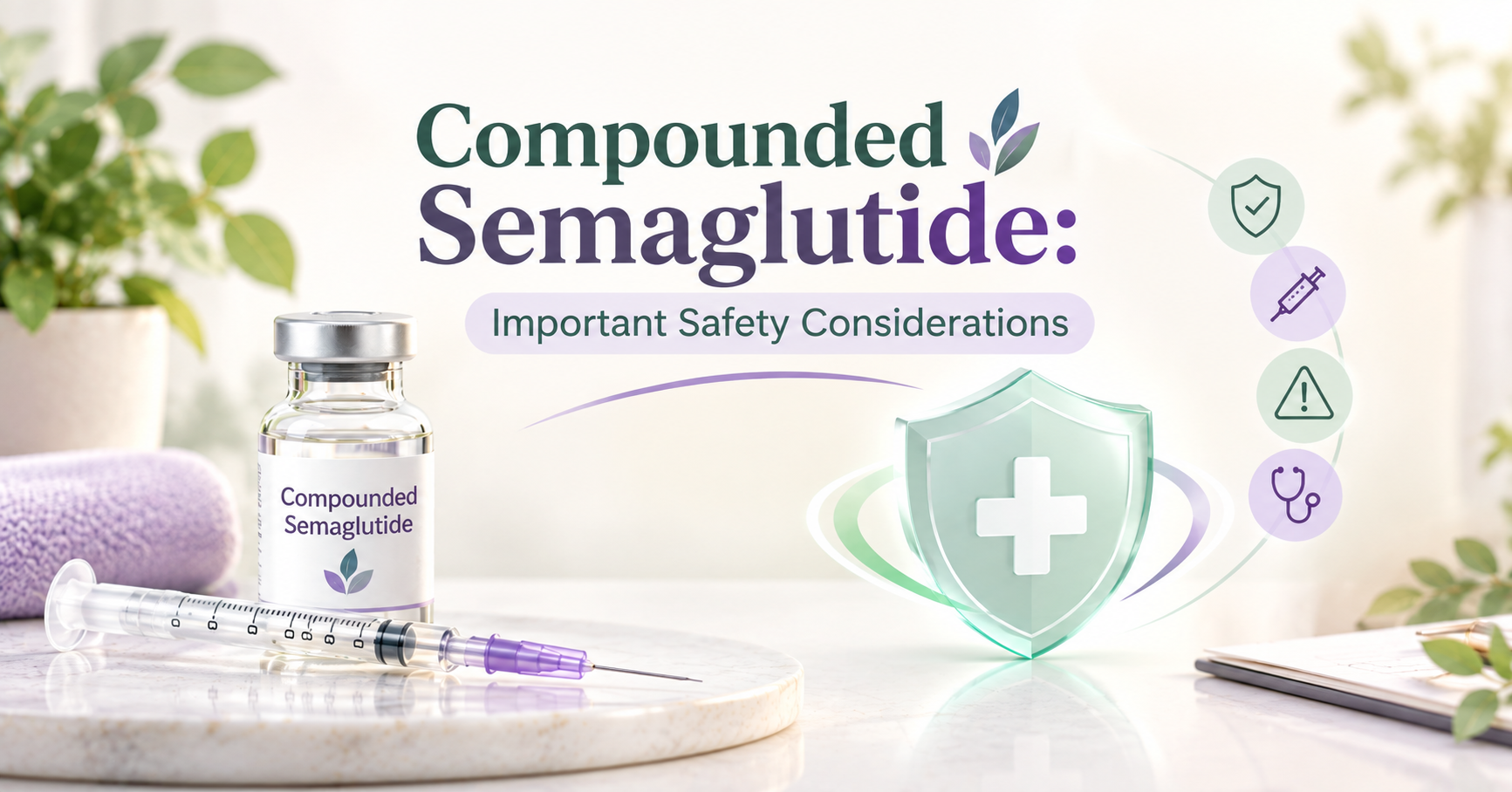
Compounded semaglutide is not FDA-approved. FDA does not verify a compounded drug’s safety, effectiveness or quality before marketing. FDA has also reported dosing errors with compounded injectable semaglutide, including overdoses linked to concentration and measurement confusion. Patients should use compounding only through legitimate clinical and pharmacy channels.
This article is for general educational information and is not a substitute for diagnosis, prescribing, dosing or individualized medical advice. Semaglutide is a prescription medicine. Product indications and instructions differ by formulation. Readers should use the exact current prescribing information and speak with a licensed healthcare professional. |
Compounded does not mean generic
A generic drug is FDA-approved under a defined regulatory pathway. A compounded drug is prepared to meet a particular need and does not go through the same approval process.
That distinction should be explicit in any consumer-facing article.
Concentration can be confusing
Some compounded injectable semaglutide products are dispensed in multidose vials rather than fixed-dose pens. The concentration may vary by pharmacy, and patients may be instructed to measure a volume with a syringe.
FDA has described errors involving confusion between milligrams, milliliters and syringe units, as well as errors by prescribers calculating doses.
Quality oversight is different
FDA does not review compounded drugs for safety, effectiveness or quality before marketing. Poor compounding practices can lead to contamination or incorrect potency.
Consumers should know which pharmacy or outsourcing facility prepared the product and what oversight applies.
Ask what form of semaglutide is being used
FDA has previously raised concerns about salt forms of semaglutide used in some compounded products. The product’s active ingredient and source should be transparent to the prescriber and patient.
Do not rely on vague labels such as ‘GLP-1 blend’ when a prescription drug is being discussed.
Avoid direct-to-consumer shortcuts
FDA’s 2026 actions show increased scrutiny of companies that market compounded GLP-1 products with misleading claims. A low-friction checkout should not replace a clinical assessment.
If a compounded product is medically necessary, the reason should be clear and documented in the treatment plan.
Frequently Asked Questions
Is compounded semaglutide FDA-approved?
No. Compounded drugs are not FDA-approved.
Why can compounded semaglutide dosing be confusing?
Vial concentration and syringe units may vary, and FDA has reported errors involving milligrams, milliliters and units.
Is compounded semaglutide the same as generic semaglutide?
No. Compounded drugs and FDA-approved generic drugs are different regulatory categories.
What should I ask before using compounded semaglutide?
Ask why compounding is needed, who prepared it, what concentration is supplied, how dosing is measured, and how the prescriber will monitor safety.