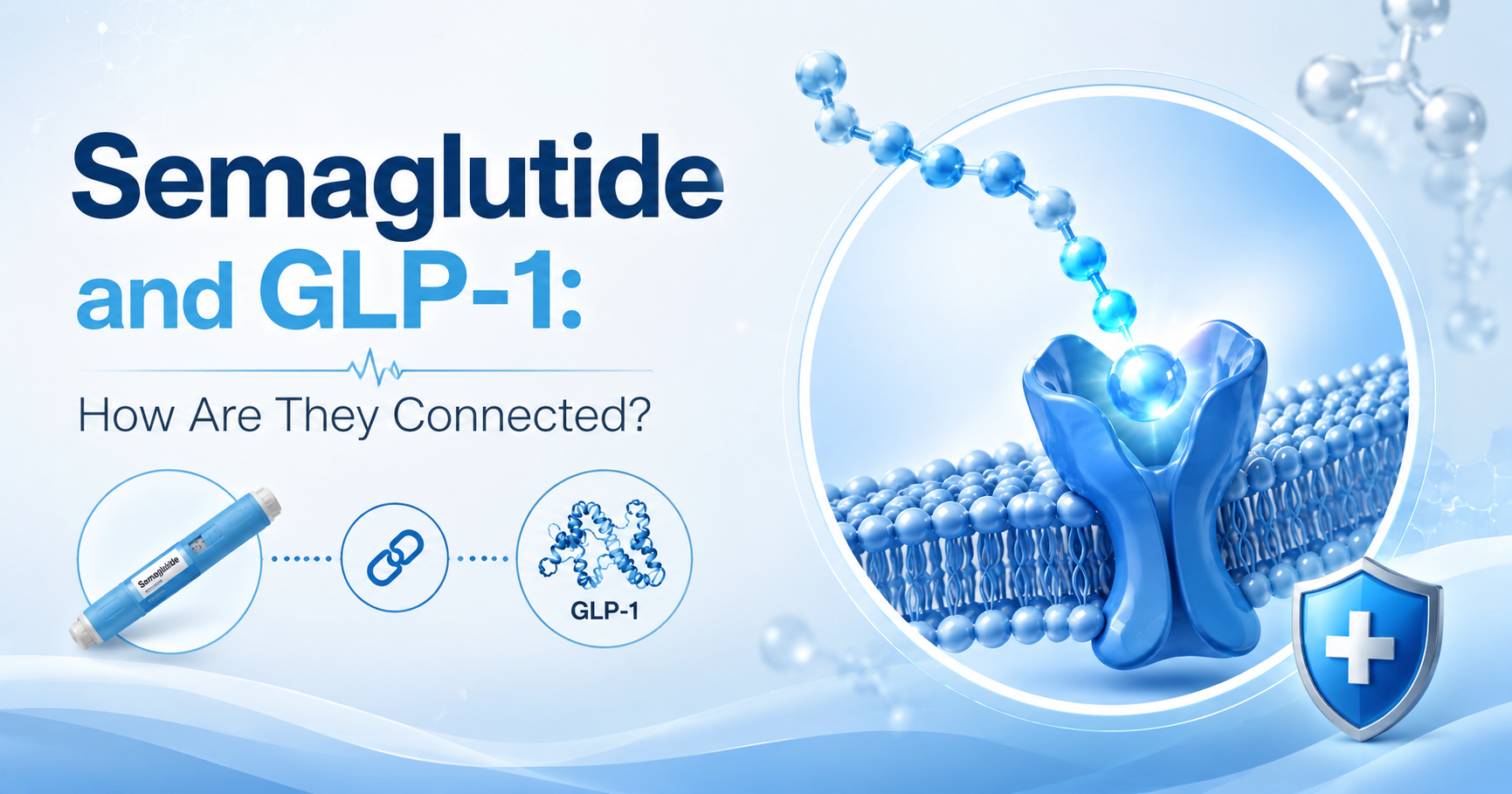
Semaglutide is a GLP-1 receptor agonist, meaning it activates the same receptor used by the natural hormone GLP-1. This influences appetite, insulin release, glucagon signaling and gastric emptying. The medicine lasts much longer than natural GLP-1, which allows prescription formulations to be used on daily or weekly schedules.
Medical information note This article is for general educational information and is not a substitute for diagnosis, prescribing, dosing or individualized medical advice. Semaglutide is a prescription medicine. Product indications and instructions differ by formulation. Readers should use the exact current prescribing information and speak with a licensed healthcare professional. |
Natural GLP-1 versus a GLP-1 medicine
Natural GLP-1 is released from the gut after food reaches the digestive system. It is part of the body’s meal-response network. The natural hormone is broken down quickly, so its signal is short-lived.
Semaglutide is engineered to resist rapid breakdown and remain active much longer. That longer activity is what makes it useful as a prescription medicine.
What happens when semaglutide activates the receptor
Semaglutide stimulates insulin secretion and reduces glucagon in a glucose-dependent way. For weight management, prescribing information also describes reduced calorie intake and appetite-related effects. Gastric emptying is delayed as well.
These actions explain why the same active ingredient has been studied across diabetes, obesity and cardiovascular outcomes rather than in only one narrow area.
Why the connection matters for side effects
The GLP-1 pathway also helps explain common gastrointestinal effects. Slower gastric emptying and changes in appetite can come with nausea, fullness, belching, constipation or diarrhea in some people.
Clinicians often use gradual dose escalation to improve tolerability. Persistent or severe symptoms should be discussed rather than treated as proof that the medicine is ‘working harder.’
Why semaglutide is not the only GLP-1 option
Liraglutide is another GLP-1 receptor agonist. Tirzepatide activates both GIP and GLP-1 receptors. These medicines differ in dosing schedules, indications, clinical evidence and safety labeling.
Choosing among them is a medical decision, not a contest based on social-media weight-loss numbers.
A better way to read GLP-1 claims
When an article says a product is ‘GLP-1,’ check whether it names the actual prescription medicine, exact formulation and approved indication. The category describes a mechanism; it does not erase product-specific differences.
Frequently Asked Questions
Is semaglutide the same as GLP-1?
No. GLP-1 is a natural hormone pathway; semaglutide is a medicine that activates the GLP-1 receptor.
What does GLP-1 do for appetite?
GLP-1 signaling is involved in appetite and satiety. Semaglutide can reduce calorie intake through effects thought to involve appetite.
Why does semaglutide slow digestion?
Semaglutide delays gastric emptying, a known pharmacologic effect of GLP-1 receptor activation.
Are all GLP-1 drugs semaglutide?
No. Semaglutide is one GLP-1 receptor agonist among several medicines in or related to this class.