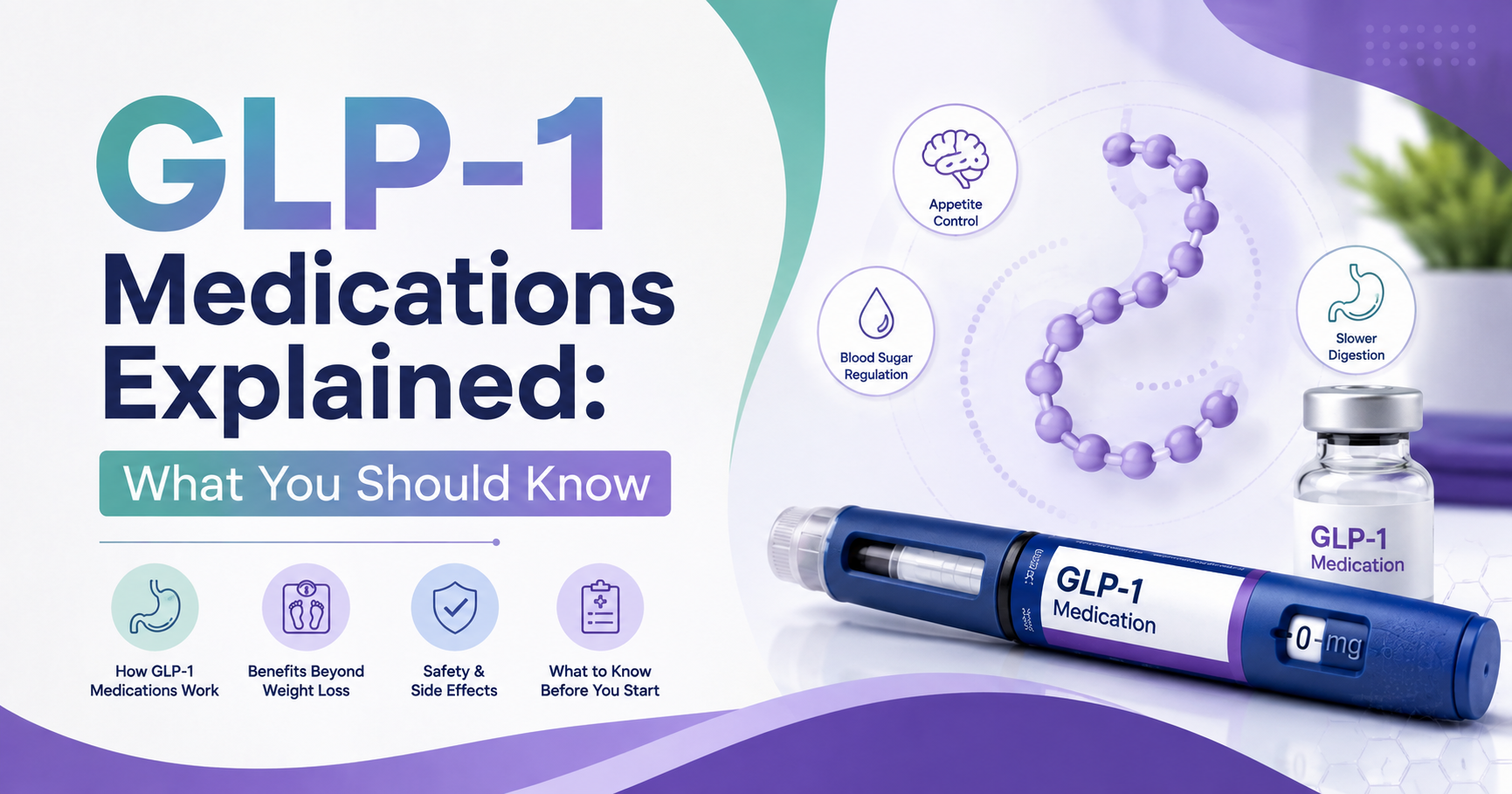
GLP-1 medications activate the glucagon-like peptide-1 receptor, a pathway involved in insulin release, glucagon signaling, appetite and digestion. Medicines in this class are used for different indications, including type 2 diabetes and, for specific products, chronic weight management. They are prescription treatments with important side effects and precautions.
Medical information note This article is for general educational information and is not a substitute for diagnosis, prescribing, dosing or individualized medical advice. Semaglutide is a prescription medicine. Product indications and instructions differ by formulation. Readers should use the exact current prescribing information and speak with a licensed healthcare professional. |
What does GLP-1 mean?
GLP-1 stands for glucagon-like peptide-1. The body releases natural GLP-1 after eating. It participates in meal-related signaling, including insulin secretion, glucagon suppression, appetite and digestive motility.
GLP-1 receptor agonist medicines are designed to activate that receptor for longer than the natural signal lasts. Semaglutide and liraglutide are examples. Tirzepatide is different because it activates both GIP and GLP-1 receptors.
Why are GLP-1 medicines used?
Different products have different FDA-approved uses. Some are diabetes medicines. Some are approved for chronic weight management in eligible patients. Some products have cardiovascular-risk or other indications based on clinical-trial evidence.
This is why it is inaccurate to call every GLP-1 product a ‘weight-loss shot.’ The active ingredient, brand, formulation, dose and indication all matter.
How can GLP-1 medicines affect appetite?
Current labeling for semaglutide and tirzepatide describes reduced calorie intake and appetite-related effects. Many people report feeling full sooner or having less drive to eat, although the experience is not identical for everyone.
A lower appetite can be helpful, but it also makes food quality more important. Protein, fiber, fluids and micronutrients can be unintentionally neglected when portions become much smaller.
What side effects are common?
Gastrointestinal symptoms are common across this class. Depending on the product, nausea, vomiting, diarrhea, constipation, abdominal discomfort and reflux-like symptoms may occur. Dose escalation is often designed to improve tolerability.
There are also less common but important risks and contraindications. Anyone considering a GLP-1 medicine should read the medication guide and discuss medical history and other prescriptions with a clinician.
How to evaluate GLP-1 information online
Look for the exact product name and a link to current prescribing information. Be cautious with pages that promise guaranteed results, encourage dose changes without a prescriber, or describe compounded products as ‘the same as’ FDA-approved medicines.
FDA has increased enforcement and warnings around misleading marketing of non-FDA-approved compounded GLP-1 products. Consumer education is part of safe treatment.
Frequently Asked Questions
Is semaglutide a GLP-1 medication?
Yes. Semaglutide is a GLP-1 receptor agonist.
Is tirzepatide a GLP-1 medication?
Tirzepatide activates both GIP and GLP-1 receptors, so it is a dual GIP/GLP-1 receptor agonist.
Are GLP-1 medicines only for diabetes?
No. Specific products are approved for weight management and other indications, while others are diabetes treatments.
Do GLP-1 medicines require a prescription?
Yes. These are prescription medicines and should be used with appropriate clinical supervision.